United in Hockey, Driven by Community
 Field Hockey Game Techniques, A Complete Overview
1. Grip and Stance
Before learning advanced moves, players must understand how to hold and position the stick correctly.
Key points:
-
- Grip:
-
- Left hand at the top of the stick for control.
-
- Right hand lower for guidance and power.
-
- Grip:
-
- Stance:
-
- Knees slightly bent, feet shoulder-width apart.
-
- Stick flat on the ground, head up, ready for quick movement.
-
- Stance:
A balanced stance helps with speed, stability, and better reaction during play.
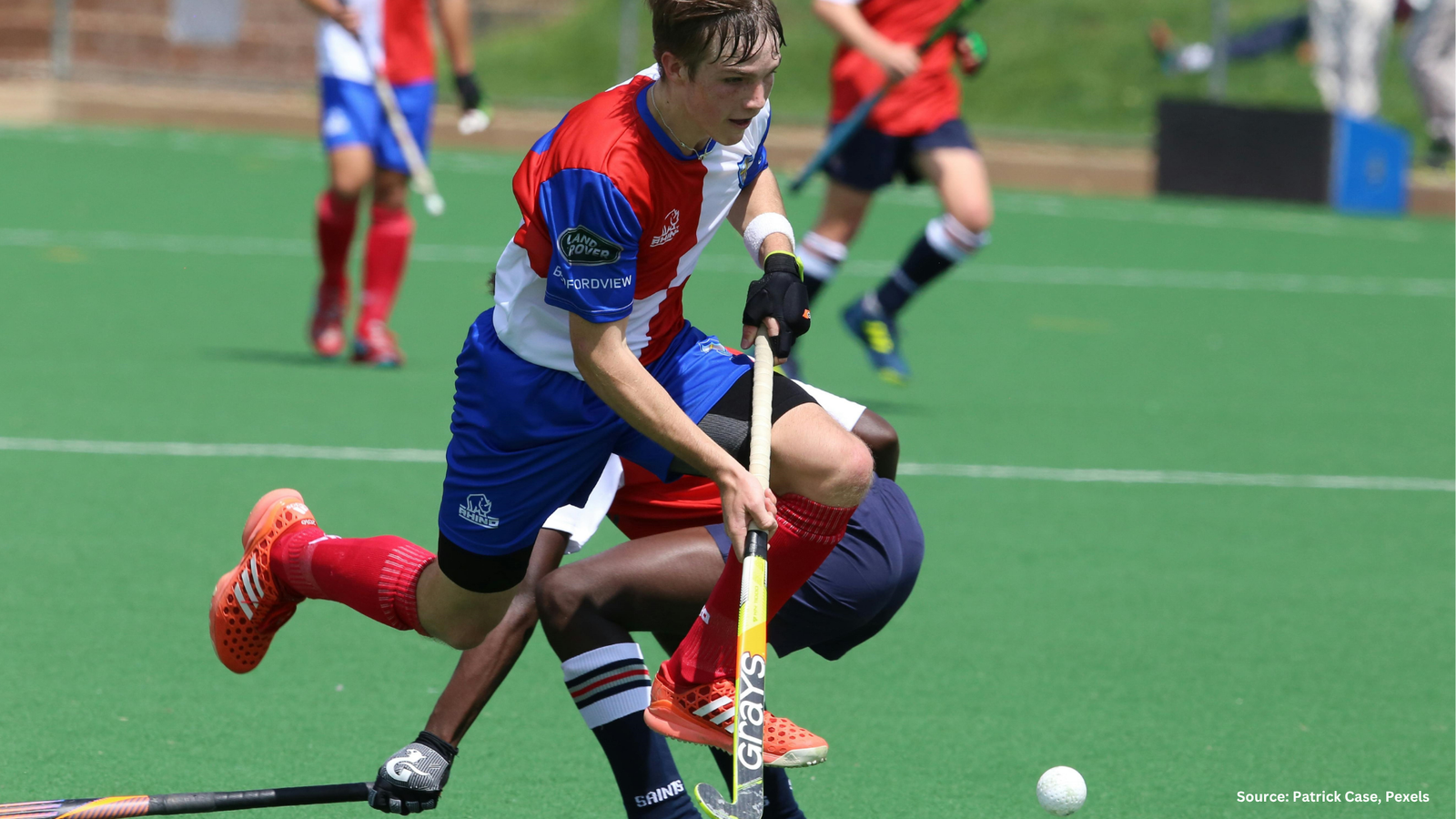
2. Dribbling
Dribbling allows players to move the ball while keeping possession.
Types of dribbling:
-
- Straight dribble: Simple forward movement using gentle pushes.
-
- Indian dribble: Quickly move the ball side to side using both stick faces.
-
- Pull-back dribble: Pull the ball backward to change direction and avoid defenders.
Tips: Keep the ball close to your stick and your eyes up to watch the field.
3. Passing Techniques
Passing helps maintain possession and build attacks.
Main types:
-
- Push pass: Used for short, quick, and accurate passes.
-
- Hit: A powerful strike for long-distance passes or shots.
-
- Slap pass: A quick, sweeping pass useful under pressure.
-
- Flick pass: Lifts the ball slightly over a defender’s stick.
Tip: Always pass to your teammate’s stick side for easy control.
4. Receiving the Ball
Receiving (or trapping) means stopping the ball safely and keeping control.
Technique:
-
- Angle the stick slightly backward.
-
- Cushion the ball’s speed by moving the stick slightly backward upon contact.
-
- Stay low and balanced.
Practicing control is essential for smooth ball movement during play.
5. Tackling and Defense
Defensive techniques help prevent opponents from scoring.
Common tackles:
-
- Block tackle: Place the stick flat on the ground to stop the ball.
-
- Poke tackle: Extend the stick to poke the ball away.
-
- Jab tackle: A short, sharp poke to disturb dribbling.
Tip: Always stay between the opponent and your goal, and time your tackles carefully to avoid fouls.
6. Shooting Techniques
Scoring requires precision, power, and timing.
Common shots:
-
- Hit: A strong swing for maximum power.
-
- Flick: A quick lifting motion for close-range scoring.
-
- Scoop: Used to lift the ball over defenders during penalty corners.
Aim for corners of the goal to make it difficult for the goalkeeper to save.
7. Dodging and Feinting
Dodging is used to beat defenders using body or stick movement.
Techniques:
-
- Body dodge: Fake movement one way, then move the other.
-
- Stick dodge: Move the ball quickly from one side of the stick to the other.
Practicing deception improves attacking play and helps create scoring chances.
8. Goalkeeping Techniques
Goalkeepers use different skills to protect the goal.
Core skills:
-
- Kicking: Clear the ball using pads or feet.
-
- Blocking: Use pads, gloves, or stick to stop shots.
-
- Positioning: Stay square to the ball and adjust based on angles.
Goalkeepers must have quick reflexes and strong communication with defenders.
9. Teamwork and Positioning
Field hockey is a team game that depends on spacing and coordination.
-
- Maintain proper distance between players.
-
- Communicate constantly on the field.
-
- Support teammates by moving into open space.
-
- Understand your position — forwards attack, midfielders connect play, defenders protect, and the goalkeeper organizes.
10. Practice and Discipline
Technical skill comes through repetition and focus.
-
- Train regularly to build muscle memory.
-
- Combine drills with small-sided games.
-
- Watch professional matches to learn from experienced players.