United in Hockey, Driven by Community
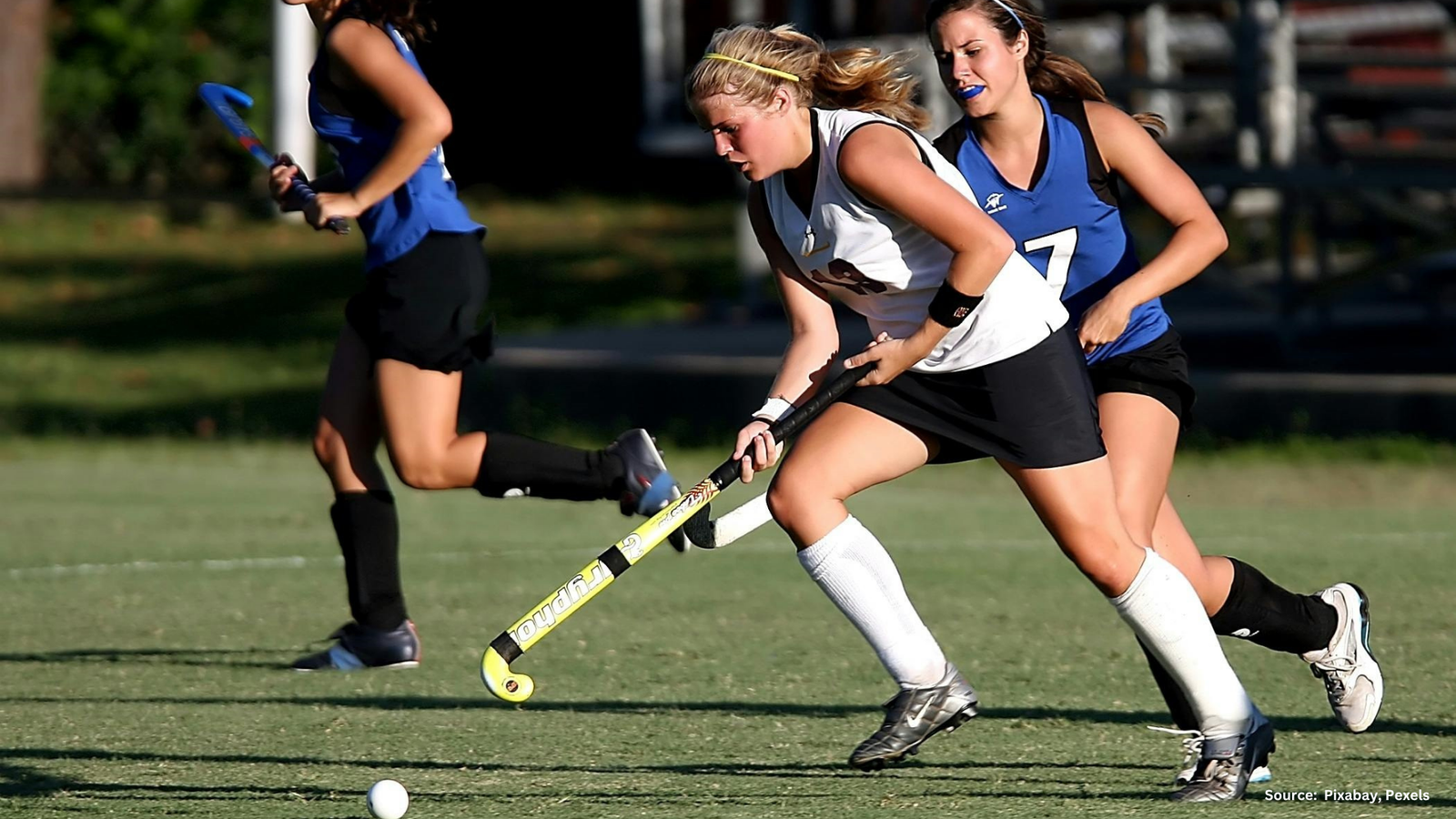 Field Hockey Skills Training, A Practical Guide
Before learning advanced techniques, players must master how to hold the stick and position their body.
Key points:
-
- Use the basic grip: left hand at the top of the stick for control, right hand lower for guidance.
-
- Keep a low, balanced stance with knees bent and back straight.
-
- Always face the play and keep the stick on the ground — ready to intercept or control the ball.
2. Ball Control and Dribbling
Dribbling helps players move the ball effectively while maintaining possession.
Drills:
-
- Straight-line dribble: Push the ball forward while keeping it close to the stick.
-
- Indian dribble: Move the ball side to side quickly using both sides of the stick.
-
- Obstacle course: Use cones to simulate defenders, focusing on control and speed.
Tips: Keep your eyes up to watch the field, not just the ball.
3. Passing and Receiving
Passing builds teamwork and game flow.
Types of passes:
-
- Push pass: The most accurate and commonly used; ideal for short to medium distances.
-
- Hit: A powerful pass or shot made by striking the ball with a backswing.
-
- Slap pass: A controlled, faster pass made with a sweeping motion.
Receiving tips:
-
- Cushion the ball’s speed by slightly withdrawing the stick as it makes contact.
-
- Stay low and angle the stick to control direction.
4. Shooting on Goal
Scoring requires accuracy, power, and quick decision-making.
Shooting techniques:
-
- Hit shot: Full backswing and follow-through for maximum power.
-
- Flick: Lift the ball off the ground without a backswing — useful near the goal.
-
- Scoop: Used for penalty corners or lifting over defenders.
Drills:
Practice shooting at different angles and distances, aiming for corners of the goal.
5. Tackling and Defense
Good defense starts with positioning, not just tackling.
Types of tackles:
-
- Block tackle: Place the stick flat on the ground to stop the ball.
-
- Poke tackle: Extend the stick to poke the ball away from the attacker.
-
- Jab tackle: A quick, short poke to disrupt dribbling.
Tips:
-
- Do not swing wildly; timing and body positioning are key.
-
- Stay between the attacker and the goal.
6. Positioning and Movement
Field awareness separates average players from skilled ones.
-
- Move into open space to support teammates.
-
- Communicate constantly during play.
-
- Anticipate passes and react quickly.
-
- Maintain proper spacing between players to keep passing lanes open.
7. Fitness and Conditioning
Hockey requires speed, stamina, and agility.
Training focus:
-
- Cardio: Running intervals and shuttle sprints.
-
- Agility drills: Ladder runs and cone changes.
-
- Strength: Core exercises (planks, lunges, squats).
-
- Flexibility: Stretching to reduce injury risk.
8. Game Awareness and Teamwork
Understanding the flow of the game is as important as physical skill.
-
- Watch professional matches to study movement and positioning.
-
- Practice set plays and penalty corners.
-
- Develop communication skills with teammates.
9. Consistency and Practice Routine
Improvement comes from repetition and discipline.
-
- Warm up before every session.
-
- Focus on one skill at a time during training.
-
- End with a short scrimmage to apply new skills in real play.
-
- Review performance and set small goals for the next session.